
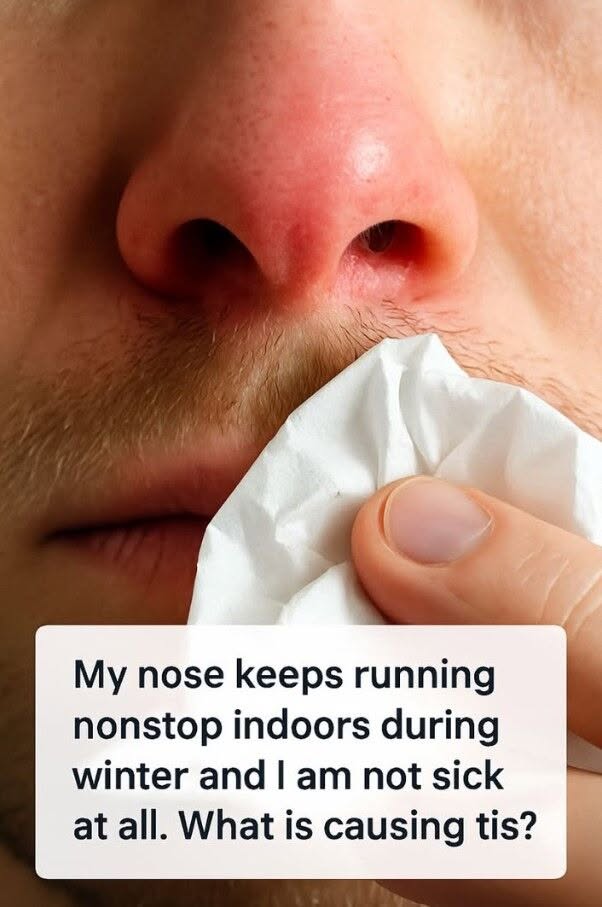
Another possible explanation is a condition known as nonallergic rhinitis, sometimes referred to as vasomotor rhinitis.
Unlike allergies, this condition is not caused by pollen, pet dander, or other allergens. Instead, it occurs when the blood vessels and nerves in the nose react strongly to environmental triggers such as:
- Temperature changes
- Dry air
- Strong odors
- Smoke or pollution
- Hormonal changes
- Certain medications
These triggers cause the nasal tissues to swell and produce excess mucus, leading to symptoms like a runny or stuffy nose.
Many people with this condition notice symptoms throughout the year, but they may become more noticeable during winter due to environmental factors.
The Role of Temperature Changes
Another factor that contributes to winter nasal drip is the sudden transition between outdoor cold air and warm indoor air.
When you move from cold to warm environments, the blood vessels in the nose expand. This change can signal mucus-producing cells to release more fluid, creating thin, watery mucus.
Because winter often involves frequent temperature changes—such as going from cold outdoor air to heated indoor spaces—your nose may constantly adjust by producing extra mucus.
Other Possible Triggers
While cold air and dry environments are the most common causes, other factors may also contribute to a persistent runny nose during winter.
Indoor Allergens
Dust mites, mold, and pet dander are common indoors during colder months. These allergens can irritate the nasal passages and trigger symptoms similar to allergies.
Strong Scents and Irritants
Perfumes, cleaning products, and cigarette smoke may irritate sensitive nasal tissues.
Spicy Foods or Alcohol
Certain foods and beverages can temporarily trigger nasal mucus production.
Hormonal Changes or Medications
Hormonal fluctuations and some medications may also affect nasal tissues and cause symptoms.
These triggers can make winter symptoms more noticeable, especially if the nose is already sensitive.
Simple Ways to Reduce the Problem
Although a winter runny nose is usually harmless, there are several practical steps that may help reduce the symptoms.
1. Use a Humidifier
Adding moisture to the air can help prevent nasal passages from drying out.
2. Drink Warm Fluids
Warm beverages help keep the body hydrated and may soothe irritated nasal tissues.
3. Try Saline Nasal Sprays
Saline sprays or rinses can help moisturize the nose and flush out irritants.
4. Improve Indoor Air Quality
Regularly cleaning dust, vacuuming carpets, and replacing air filters can reduce airborne irritants.
5. Protect Your Nose Outdoors
Wearing a scarf over your nose and mouth can warm and humidify the air before it reaches your nasal passages.
These simple measures can often make a noticeable difference.
Continued on next page//
To see the complete cooking instructions, go to the next page or click the Open (>) button and don't forget to SHARE it with your friends on Facebook.