
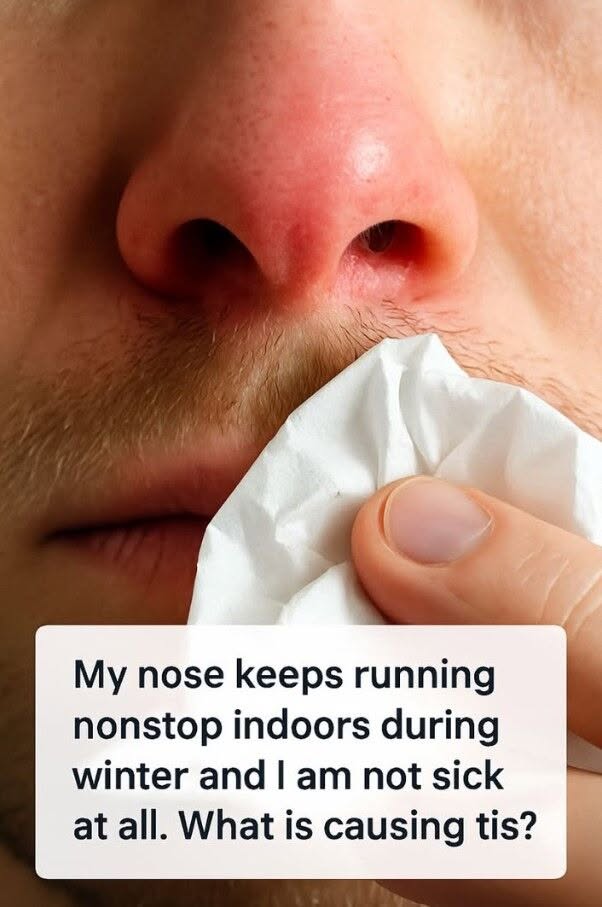
My Nose Keeps Running Indoors During Winter — But I’m Not Sick. What’s Causing It?

When to See a Doctor

In most cases, a runny nose during winter is harmless and temporary. However, it may be worth consulting a healthcare professional if:

  • Symptoms persist for many weeks
  • The mucus becomes thick, yellow, or green
  • You experience severe congestion or facial pain
  • Over-the-counter treatments don’t help

A doctor can determine whether allergies, sinus issues, or another condition might be responsible.

Conclusion :

A constantly running nose during winter—even when you’re not sick—can feel frustrating and confusing. However, in many cases it’s simply your body responding to cold temperatures, dry air, and indoor environmental conditions.

Your nose works hard to protect your lungs by warming and humidifying the air you breathe. When winter conditions disrupt this balance, your body naturally produces extra mucus to compensate.

Understanding these triggers can help you manage the symptoms and prevent unnecessary worry. With simple steps like maintaining indoor humidity, reducing irritants, and keeping nasal passages moisturized, you can often keep the problem under control and breathe more comfortably throughout the winter season.


Understanding these triggers can help you manage the symptoms and prevent unnecessary worry. With simple steps like maintaining indoor humidity, reducing irritants, and keeping nasal passages moisturized, you can often keep the problem under control and breathe more comfortably throughout the winter season.

Understanding these triggers can help you manage the symptoms and prevent unnecessary worry. With simple steps like maintaining indoor humidity, reducing irritants, and keeping nasal passages moisturized, you can often keep the problem under control and breathe more comfortably throughout the winter season.
Understanding these triggers can help you manage the symptoms and prevent unnecessary worry. With simple steps like maintaining indoor humidity, reducing irritants, and keeping nasal passages moisturized, you can often keep the problem under control and breathe more comfortably throughout the winter season.

Understanding these triggers can help you manage the symptoms and prevent unnecessary worry. With simple steps like maintaining indoor humidity, reducing irritants, and keeping nasal passages moisturized, you can often keep the problem under control and breathe more comfortably throughout the winter season.

To see the complete cooking instructions, go to the next page or click the Open (>) button and don't forget to SHARE it with your friends on Facebook.