
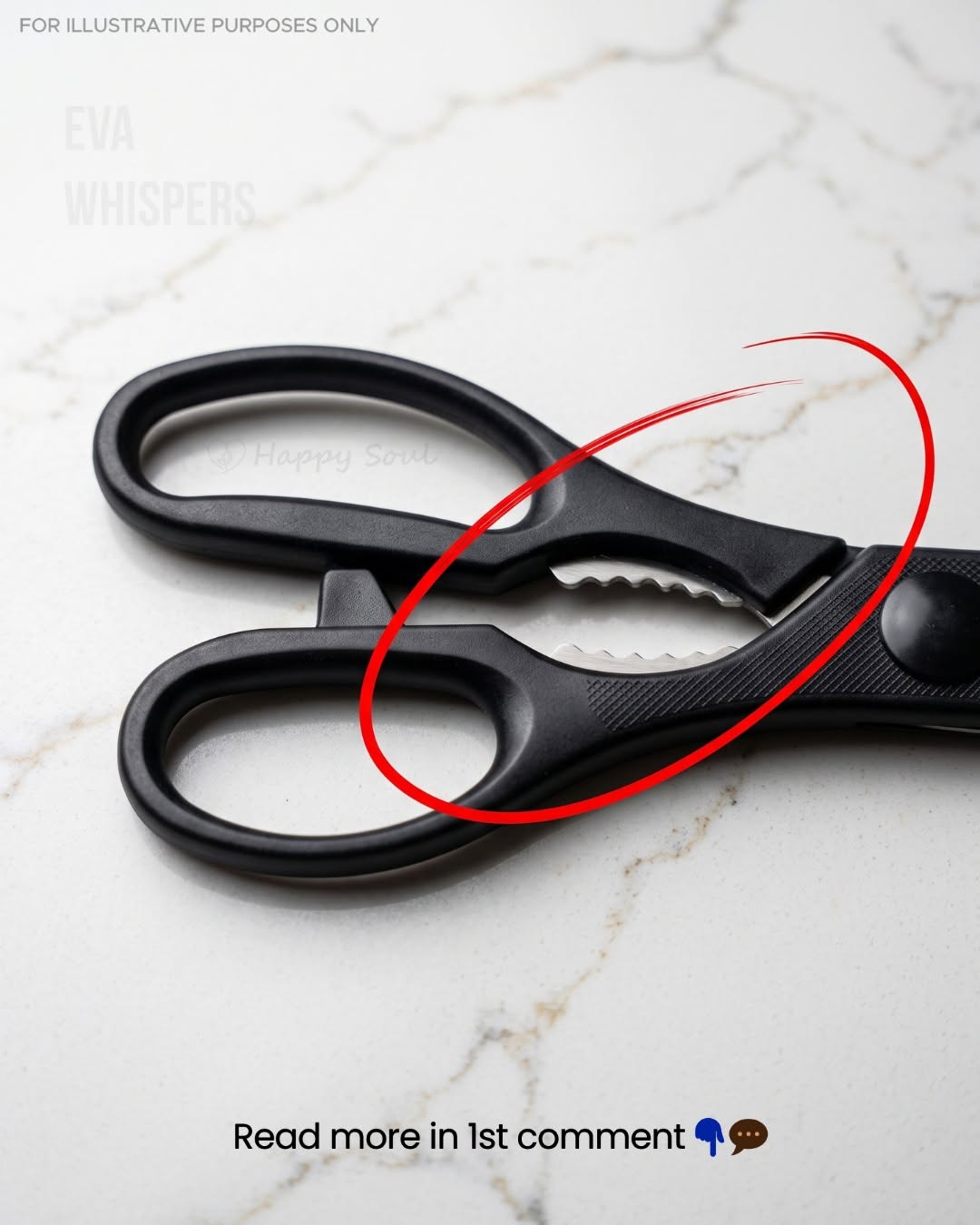
Have you ever noticed the strange jagged section tucked between the handles of your kitchen scissors? It usually sits right behind where your fingers rest, looking like a random little row of teeth. Many people own kitchen scissors for years without ever knowing what that part is actually meant to do.
At first glance, it might seem like a design mistake or just a decorative notch. But that toothy section is not there by accident. It is a clever built-in tool designed to help with several common kitchen tasks.
In fact, once you understand what it does, you may never look at your kitchen scissors the same way again.
So, What Is It?
That ridged part is usually called a gripper, though some brands describe it as a jar opener, nutcracker, or bone gripper. Its main job is simple: it helps you hold, twist, crack, or grip things that are too slippery or tough to handle with your fingers alone.
When you close the scissors slightly, the teeth come together and create a strong gripping surface. This gives you extra traction and pressure, making certain kitchen jobs much easier.
Think of it as the quiet little helper hiding inside your scissors.
It Can Help Open Stubborn Jars and Bottles
One of the most useful jobs for that toothed section is opening tight lids.
Almost everyone has struggled with a jar that refuses to open. You twist, tap the lid, wrap it in a towel, and still nothing happens. That is where the gripper comes in.
Place the lid between the ridged teeth, close the scissors gently around it, and twist. The teeth help hold the lid firmly so your hand does not slip. This can work especially well on smaller caps, such as soda bottles, sauce bottles, tonic water caps, or other containers with stubborn lids.
For people who have limited hand strength, this small feature can be surprisingly helpful.
It Can Crack Nuts
Another common use for the toothed part is cracking nuts.
No nutcracker nearby? Your kitchen scissors may be able to help. Place a walnut, pecan, or hazelnut between the ridges and squeeze the handles gently until the shell cracks.
The key is to use steady pressure, not brute force. You only want to crack the shell, not crush the nut inside into crumbs. Rotate the nut and repeat until the shell loosens enough to remove.
It may not replace a proper nutcracker, but it works well when you need a quick solution.
It Can Grip Small Poultry Bones
Continued on next page//
To see the complete cooking instructions, go to the next page or click the Open (>) button and don't forget to SHARE it with your friends on Facebook.