
No, not all scissors include this feature.
You are most likely to find it on kitchen shears, poultry shears, or heavy-duty multipurpose scissors. Regular office scissors usually do not have it because they are made for paper, not food or tougher kitchen tasks.
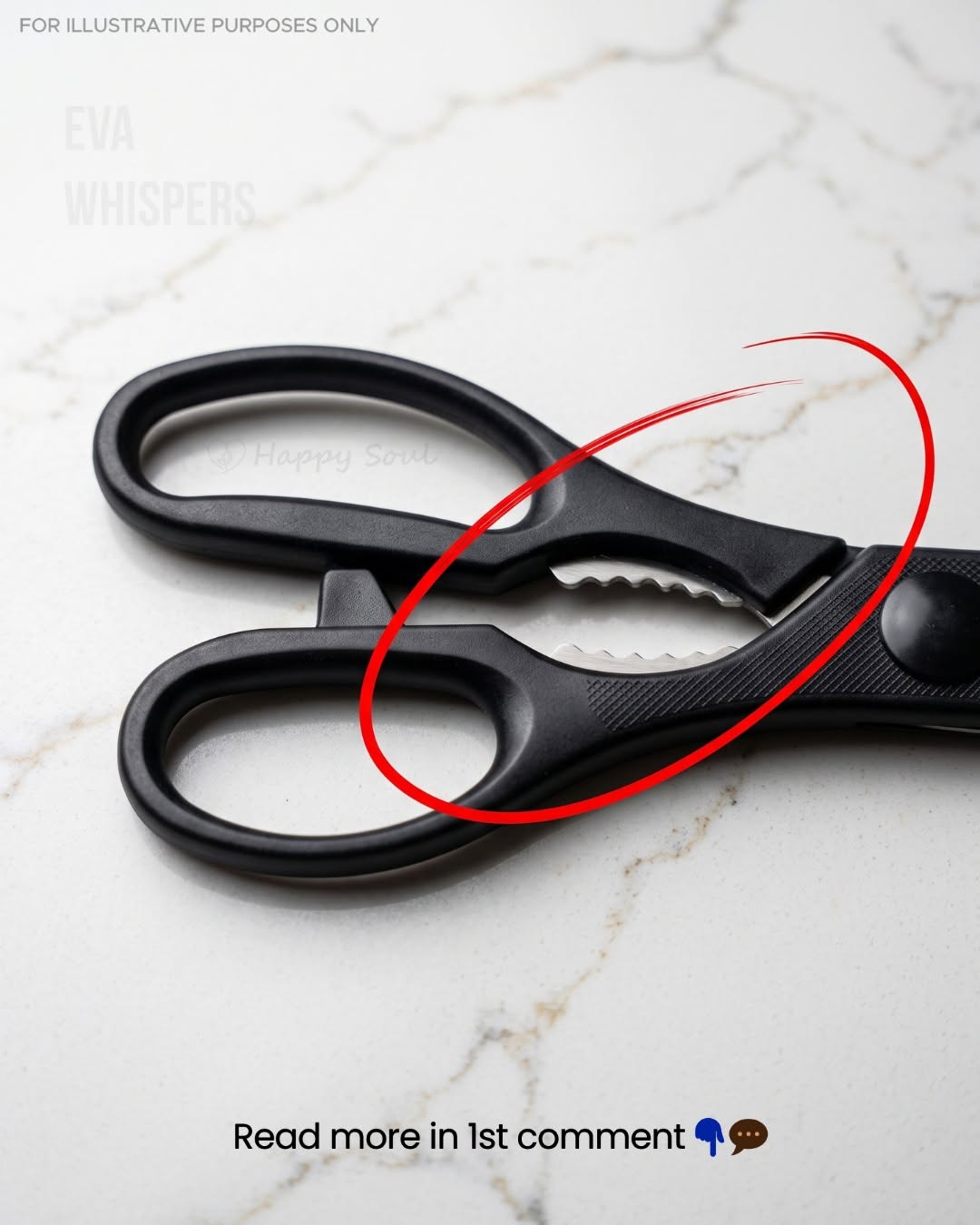
To check your own pair, look between the handles. If you see two notched or ridged sections that line up when the scissors close, then your scissors have a built-in gripper.

A Few Safety Tips
Before using it, keep a few things in mind.
Do not force it on anything too hard. Thick bones, rock-hard nuts, or heavy-duty objects can damage your scissors or hurt your hands.
Keep your fingers away from the toothed area while squeezing. Those ridges can pinch.
Always clean the gripper thoroughly after using it, especially if it touches raw meat, seafood, sticky sauces, or oily lids. Food residue can easily hide in the grooves.
And finally, use it for kitchen tasks only. It might seem strong enough for wires, paint cans, or household repairs, but using it that way can ruin the scissors.
The Hidden Power of a Small Kitchen Detail
That weird toothed part on kitchen scissors may look like a strange little design detail, but it is actually one of the most useful hidden features in your kitchen drawer.
It can help open stubborn lids, crack nuts, grip bones, break seafood shells, and hold slippery items in place. In other words, it turns an ordinary pair of scissors into a small multi-purpose kitchen tool.
So the next time you reach for your kitchen scissors, do not ignore that jagged notch between the handles. It may be small, but it can save you time, effort, and frustration.
Once you start using it, you may wonder how you ever overlooked it.
To see the complete cooking instructions, go to the next page or click the Open (>) button and don't forget to SHARE it with your friends on Facebook.