

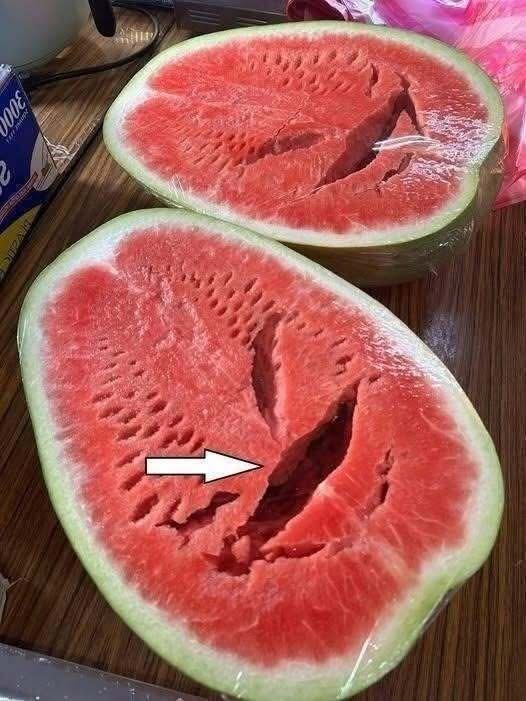
Cutting open a watermelon and finding cracks or hollow spaces inside can be surprising. At first, it may look like something is wrong with the fruit, especially because many alarming claims about food safety circulate online. However, internal cracks in watermelon are not always a sign of danger.
In many cases, these cracks form naturally while the fruit is growing. Watermelons can develop hollow areas or splits inside because of uneven watering, sudden growth after dry weather, changes in temperature, overripeness, or pressure during transportation. These factors can affect the fruit’s texture and appearance without automatically making it unsafe to eat.
One subject often mentioned in online discussions is the use of plant growth regulators. These agricultural products are sometimes used to support crop development and may influence fruit size, growth speed, or internal structure. Rules regarding their use vary depending on the country or region, and agricultural authorities set standards intended to protect both production quality and consumer safety.
Still, the presence of cracks alone does not prove that a watermelon has been treated with anything harmful. Internal splitting can happen even in naturally grown fruit, especially when weather and growing conditions change quickly.
When choosing a watermelon, it is helpful to look for a few simple signs of freshness. A good watermelon often feels heavy for its size, has a firm outer rind, and shows a creamy yellow field spot where it rested on the ground. These signs usually suggest that the fruit had time to ripen properly.
Continued on next page//
To see the complete cooking instructions, go to the next page or click the Open (>) button and don't forget to SHARE it with your friends on Facebook.