

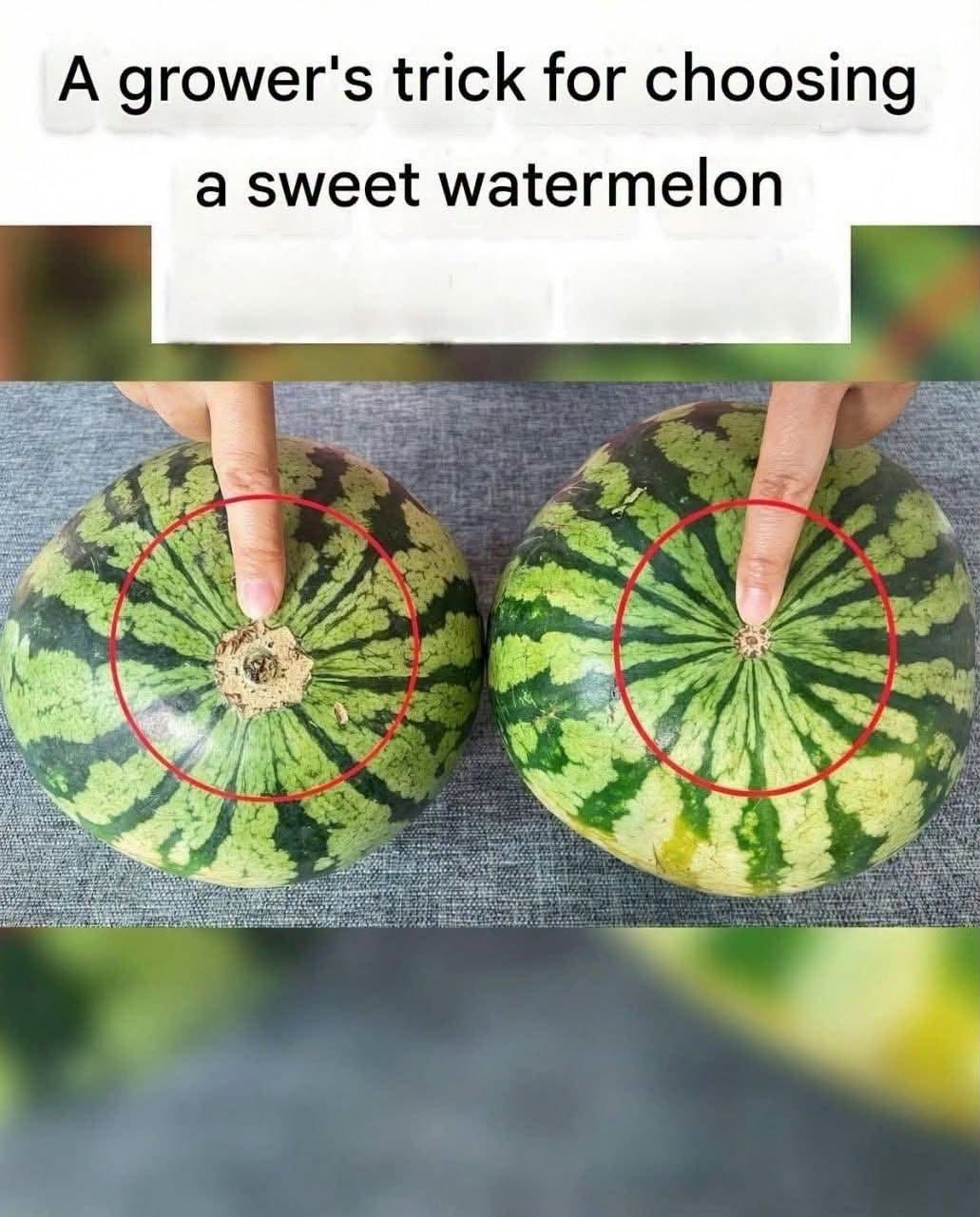
Oh, my dear friend, I see headlines exactly like this, and I have to nod in enthusiastic agreement! There is nothing quite as heartbreaking as lugging a massive, heavy watermelon all the way home from the market, slicing it open with great anticipation, and finding pale, white, flavorless flesh inside.
At 73, living alone in my cozy farmhouse, I have learned that the best summer treats are the ones that deliver maximum, refreshing sweetness with absolute certainty. I love a crisp, juicy slice of melon on a hot afternoon, but I certainly don’t want to rely on guesswork or the confusing "thump" test to find a good one.
Enter this No-Fuss Visual Guide to Picking the Perfect Watermelon.
This method perfectly honors my mother-in-law’s golden rule for market shopping: rely on the quiet, visual clues the harvest leaves behind, rather than relying on tricks or gimmicks. It requires almost zero effort, and it guarantees a melon so deeply flavorful and sweet that the rind is scraped completely clean!
Grab your favorite mug of iced tea, because we’re about to bring the absolute best of summer straight to your kitchen island.
The "Kitchen Science" Reality: The 5 Visual Clues of a Sweet Melon
First, take a deep breath and leave the stress of the produce aisle behind. You don’t need to be a farmer to pick a perfect melon; you just need to know what to look for. The plant leaves behind a beautiful, practical trail of clues!
Here is the beautiful, science-backed truth behind the visual guide:
- The Field Spot (The Sunbathing Mark): Look for the patch on the melon’s belly where it rested on the ground. You want a creamy, dark yellow or almost orange-yellow spot. If it is white or very pale, the melon was picked too early and will never sweeten up!
- The Webbing (The Sugar Scars): Those rough, brown, web-like scratches on the rind are actually a wonderful thing! They indicate that bees pollinated the flower many times. More pollination means more fruit development, which translates to a much higher sugar content. Look for melons with plenty of webbing!
- The Shape (The Symmetry Rule): Look for a uniform, symmetrical shape, whether it is round or oval. Avoid melons with odd bumps, dents, or irregular curves. Science tip: Bumps indicate the plant received inconsistent water or sun, which disrupts the even development of natural sugars.
- The Weight (The Hydration Test): Pick it up! A good watermelon should feel heavy for its size. This means it is plump and packed with water, which is exactly what gives it that crisp, juicy, refreshing crunch.
- The Stem (The Vine-Ripened Clue): Look at the little stem nub. If it is green, the melon was picked too early. If it is dry, brown, and slightly indented, it means the melon naturally detached from the vine when it was fully, perfectly ripe.
The Health Connection: Why Watermelon is Medicine for Your Veins
Continued on next page//
To see the complete cooking instructions, go to the next page or click the Open (>) button and don't forget to SHARE it with your friends on Facebook.
What Happens to Your Body When You Eat Purslane Every Day — Especially After 60

Your Toaster Is Grosser Than You Think (Here’s How to Fix That)

THE MOST POTENT HERB THAT DESTROYS PARASITES, URINARY TRACT …
11 Foods You Should Never Put in a Slow Cooker
These are wild, small, oblong, red, sweet-sour fruits with a tart taste. They grow in autumn in bushes, on the edges of forests, and in hilly areas.